Genitive Case (Genitiv)
Question: Koho? Čeho? (Of whom? Of what?)
The Genitive is the "Of" case. It indicates possession, quantity, and follows many prepositions.
The genitive has two fundamental meanings:
- Possession/Belonging: whose is it? auto mého otce (my father's car)
- Source/Origin: from where? z Prahy (from Prague)
Extended meanings flow from these:
- Quantity (part OF a whole): hodně lidí (a lot of people)
- Absence (lack OF): bez peněz (without money)
- Object of verbs (afraid OF): bojím se psa (I'm afraid of the dog)
The key insight: Genitive answers "of what/whom?" or "from where?"
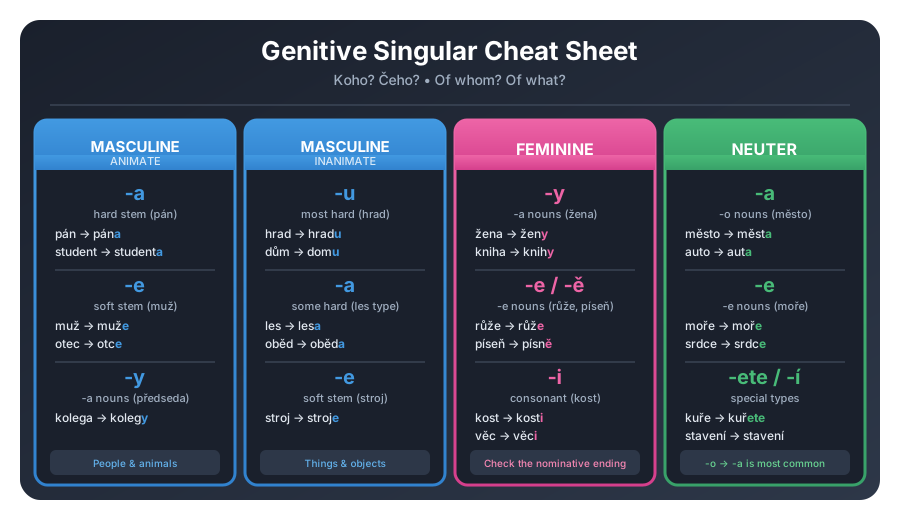
At a Glance (Singular)
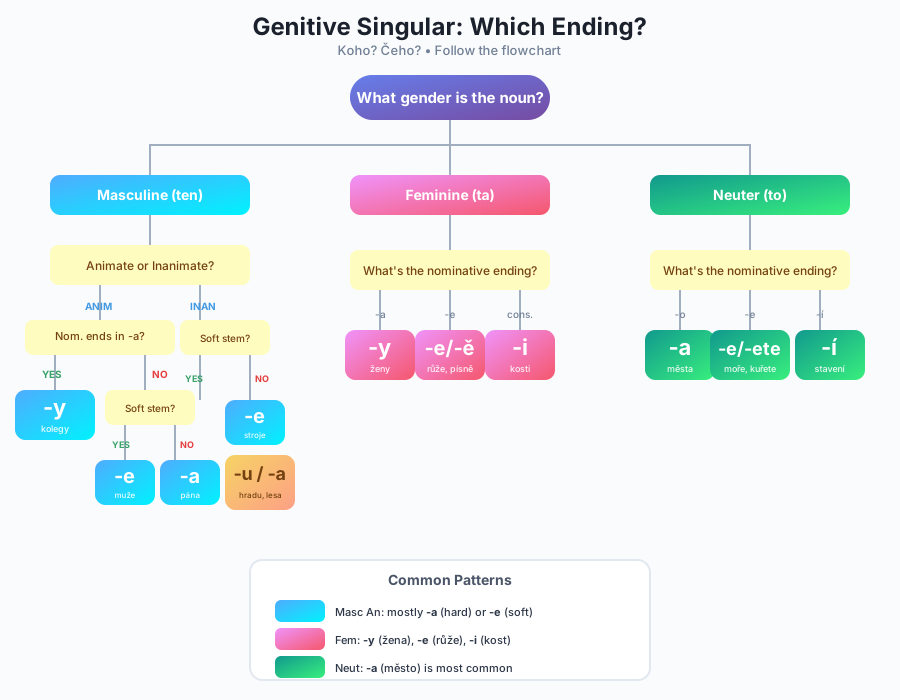
Which Ending? Follow the Flowchart
Memory Aids (Mnemonics)
Use these tricks to remember the patterns you just saw in the cheatsheets above.
The "-a/-u" Split for Masculine
The hardest part of genitive is knowing when masculine nouns take -a vs -u:
| Ending | When to Use | Memory Aid |
|---|---|---|
| -a | Animate nouns (living things) | Animate = A ending |
| -a | Concrete, countable objects | Physical things you can touch |
| -u | Abstract nouns | Unreal = U ending |
| -u | Foreign words, -ismus words | Universal imports use U |
| -u | Mass nouns (uncountable) | Uncountable = U |
Examples:
- pána (of the man) — animate
- domu (of the house) — abstract location concept
- socialismu** (of socialism) — -ismus word
- čaje (of tea) — wait, this is -e! (soft stem)
Soft Stems Always Take -e
If the noun ends in a soft consonant (ž, š, č, ř, c, j), it takes -e:
- muž → muže (of the man)
- stroj → stroje (of the machine)
- čaj → čaje (of the tea)
Memory: "Soft consonants get soft -e"
Feminine Pattern: Match the Nominative
| Nom ending | Gen ending | Pattern |
|---|---|---|
| -a | -y | Hard vowel → hard vowel |
| -e | -e | Soft stays soft |
| consonant | -i / -ě | Add a vowel |
Memory: "Feminine -a → -y, simple as ABC... Y"
The Zero Ending Trap (Plural)
The genitive plural of žena and město types has a zero ending — the ending disappears:
- žena → žen (of women) — NOT
ženů - město → měst (of cities) — NOT
městů
Memory: "Women and cities are so valuable, they need no decoration"
Numbers and Counting — When Genitive Is Required
This is one of the most practical uses of genitive in Czech.
The Number Rules
| Number | Case Required | Example |
|---|---|---|
| 1 | Nominative Sg | jeden student |
| 2, 3, 4 | Nominative Pl | dva studenti, tři studenti |
| 5+ | Genitive Pl | pět studentů |
| 0 | Genitive Pl | nula studentů |
With Quantity Words
All of these require genitive:
| Word | Meaning | Example |
|---|---|---|
| hodně | a lot | hodně lidí (many people) |
| málo | few/little | málo času (little time) |
| kolik | how many | kolik let? (how many years?) |
| několik | several | několik knih (several books) |
| trochu | a little | trochu vody (a little water) |
| dost | enough | dost peněz (enough money) |
| mnoho | many (formal) | mnoho problémů (many problems) |
| moc | too much | moc práce (too much work) |
| příliš | too (excessive) | příliš soli (too much salt) |
Container and measure words also require genitive:
- láhev vína (a bottle of wine)
- sklenice vody (a glass of water)
- kilo jablek (a kilo of apples)
- kousek chleba (a piece of bread)
Prepositions That Require Genitive
Movement FROM (Source)
| Preposition | Meaning | Example |
|---|---|---|
| z/ze | from (out of) | z Prahy (from Prague) |
| od | from (a person/time) | od maminky (from mom) |
| s/se | from (off of) | spadl se stromu (fell from tree) |
- z = from inside or from a place: z domu (from home)
- od = from a person or starting point: od lékaře (from the doctor), od rána (since morning)
Location/Proximity
| Preposition | Meaning | Example |
|---|---|---|
| u | at/by/near | u babičky (at grandma's) |
| vedle | next to | vedle školy (next to school) |
| blízko | near | blízko centra (near center) |
| kolem/okolo | around | kolem stolu (around the table) |
| uprostřed | in the middle of | uprostřed města (in the city center) |
| podél | along | podél řeky (along the river) |
| poblíž | nearby | poblíž nádraží (near the station) |
Other Essential Prepositions
| Preposition | Meaning | Example |
|---|---|---|
| do | into/to/until | do Prahy (to Prague), do pěti (until five) |
| bez | without | bez cukru (without sugar) |
| během | during | během dne (during the day) |
| kromě | except | kromě tebe (except you) |
| místo | instead of | místo mě (instead of me) |
| kvůli | because of | kvůli dešti (because of rain) |
| podle | according to | podle mě (according to me) |
Usage
1. Possession (Of)
- Auto mého otce. (My father's car.)
- Barva auta. (The color of the car.)
- Střecha domu. (The roof of the house.)
2. Quantity (Partitive)
Used after numbers (5+) and quantity words.
- Pět piv. (Five beers - Gen. Plural)
- Hodně lidí. (A lot of people.)
- Trochu vody. (A little bit of water.)
- Láhev vína. (A bottle of wine.)
3. After Negated Verbs (Optional, Archaic)
In older or formal Czech, direct objects of negated verbs could be genitive:
- Nemám peněz. (I have no money.) — archaic
- Nemám peníze. (I have no money.) — modern
4. Dates
- Prvního května. (On the first of May.)
Detailed Reference Tables
Singular Endings
| Gender | Model | Ending | Example (Nom → Gen) |
|---|---|---|---|
| Masc Animate | pán | -a | pán → pána |
| muž | -e | muž → muže | |
| předseda | -y | předseda → předsedy | |
| soudce | -e | soudce → soudce | |
| Masc Inanimate | hrad | -u / -a | hrad → hradu, les → lesa |
| stroj | -e | stroj → stroje | |
| Feminine | žena | -y | žena → ženy |
| růže | -e | růže → růže | |
| píseň | -ě/-e | píseň → písně | |
| kost | -i | kost → kosti | |
| Neuter | město | -a | město → města |
| moře | -e | moře → moře | |
| kuře | -ete | kuře → kuřete | |
| stavení | -í | stavení → stavení |
Plural Endings
The Genitive Plural is essential for counting (5+) and quantity expressions. Watch out for zero endings!
At a Glance (Plural)

Endings by Gender
| Gender | Model | Ending | Example (Nom Sg → Gen Pl) |
|---|---|---|---|
| Masculine | pán | -ů | pán → pánů |
| muž | -ů | muž → mužů | |
| hrad | -ů | hrad → hradů | |
| Feminine | žena | ∅ (zero) | žena → žen |
| růže | -í | růže → růží | |
| kost | -í | kost → kostí | |
| Neuter | město | ∅ (zero) | město → měst |
| moře | -í | moře → moří | |
| kuře | -at | kuře → kuřat |
The žena and město types lose their ending entirely:
- pět žen (five women) — not
ženů - hodně měst (many cities) — not
městů - několik oken (several windows)
This often requires inserting a vowel to make pronunciation possible:
- sestra → sester (of sisters) — insert -e-
- okno → oken (of windows) — insert -e-
Fleeting Vowels in Genitive Plural
When consonant clusters would be too hard to pronounce, a vowel appears:
| Nominative Sg | Genitive Pl | Vowel Inserted |
|---|---|---|
| matka | matek | -e- |
| sestra | sester | -e- |
| okno | oken | -e- |
| jablko | jablek | -e- |
| hra | her | -e- |
| koruna | korun | (no cluster) |
Verbs That Require Genitive
Some verbs inherently require the genitive case for their object.
Verbs of Fearing/Avoiding
| Verb | Meaning | Example |
|---|---|---|
| bát se | to be afraid of | Bojím se psa. (I'm afraid of the dog.) |
| obávat se | to fear/worry | Obávám se nejhoršího. (I fear the worst.) |
| varovat se | to beware of | Varuj se toho člověka. (Beware of that person.) |
| zbavit se | to get rid of | Zbavil se problému. (He got rid of the problem.) |
Verbs of Noticing/Touching
| Verb | Meaning | Example |
|---|---|---|
| všímat si | to notice | Všimla si chyby. (She noticed the mistake.) |
| dotýkat se | to touch | Nedotýkej se toho! (Don't touch it!) |
| týkat se | to concern | Týká se to tebe. (It concerns you.) |
| zúčastnit se | to participate in | Zúčastnil se schůze. (He attended the meeting.) |
Verbs of Asking/Seeking
| Verb | Meaning | Example |
|---|---|---|
| ptát se | to ask | Ptám se učitele. (I'm asking the teacher.) |
| zeptat se | to ask (pf) | Zeptej se maminky. (Ask mom.) |
| hledat | can take Gen | Hledal štěstí. (He sought happiness.) — literary |
| dosáhnout | to achieve/reach | Dosáhl úspěchu. (He achieved success.) |
Common Errors and How to Avoid Them
1. Wrong Ending: -a vs -u
❌ do doma → ✅ do domu (abstract/location concept) ❌ od pánu → ✅ od pána (animate = -a)
Rule: Animate and concrete = -a, abstract/foreign/mass = -u
2. Forgetting Zero Ending in Plural
❌ pět ženů → ✅ pět žen (zero ending for žena type) ❌ hodně městů → ✅ hodně měst (zero ending for město type)
3. Wrong Preposition Case
❌ do Prahu → ✅ do Prahy (do + genitive, not accusative) ❌ od maminkou → ✅ od maminky (od + genitive)
4. Using Genitive After Numbers 2-4
❌ dva studentů → ✅ dva studenti (2-4 = nominative plural) ❌ tři piva → ✅ tři piva (correct! neuter nom pl)
5. Forgetting Fleeting Vowels
❌ pět sestr → ✅ pět sester (insert -e- for pronunciation) ❌ několik okn → ✅ několik oken (insert -e-)