Nominative Case (Nominativ)
Question: Kdo? Co? (Who? What?)
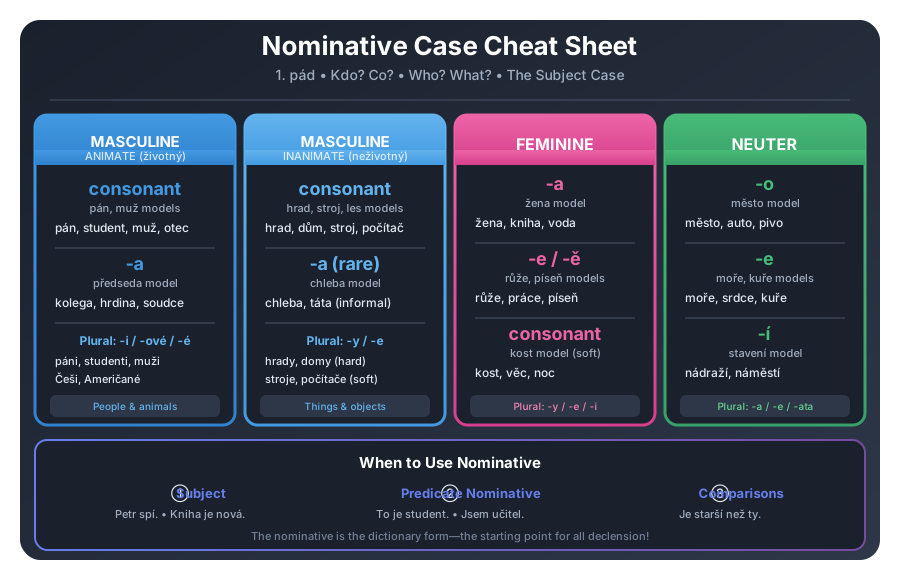
The Nominative is the basic dictionary form of the noun. It is used for the Subject of the sentence.
The nominative is the starting point for understanding Czech nouns:
- Subject: who/what does the action: Petr spí (Peter sleeps)
- Identity: what something IS: To je kniha (That is a book)
- Dictionary form: how you find words: město, žena, pán
The key insight: Nominative answers "who or what is doing/being?"
Unlike other cases, the nominative is the "default" form — it's what you start with before declining.
At a Glance
Memory Aids (Mnemonics)
The Gender System
Czech has three genders, and you MUST memorize the gender of each noun. Here's how to guess:
| Gender | Typical Endings | Examples |
|---|---|---|
| Masculine | consonant | student, hrad, stroj |
| Feminine | -a, -e, consonant | žena, růže, kost |
| Neuter | -o, -e, -í | město, moře, nádraží |
Memory aids:
- "Masculine = muscle consonants" (most end in hard consonants)
- "Feminine = soft A" (most end in -a)
- "Neuter = O in the middle" (most end in -o)
The Animate/Inanimate Split
Masculine nouns split into animate (living) and inanimate (non-living):
| Type | Examples | Matters in... |
|---|---|---|
| Animate | pán, muž, pes, student | Accusative, Nominative Pl |
| Inanimate | hrad, stůl, stroj, čaj | Has simpler endings |
Memory: "If it can run away, it's animate!" (people, animals, some personified things)
The Declension Models (Vzory)
Czech uses "model words" to show declension patterns:
| Gender | Models | What they represent |
|---|---|---|
| Masc Animate | pán, muž, předseda, soudce | Hard, soft, -a ending, -e ending |
| Masc Inanimate | hrad, stroj | Hard, soft |
| Feminine | žena, růže, píseň, kost | -a, -e, soft cons, hard cons |
| Neuter | město, moře, kuře, stavení | -o, -e, -ě, -í |
Memory: "Each model is a template — learn the model, know hundreds of words!"
Plural Formation — The Key Patterns
The nominative plural is one of the first things you need to master.
Masculine Animate (The Complex One!)
| Model | Sg → Pl | Ending | Examples |
|---|---|---|---|
| pán | pán → páni | -i | student → studenti, Čech → Češi |
| -ové | pán → pánové (formal/titles) | ||
| muž | muž → muži | -i | učitel → učitelé |
| předseda | předseda → předsedové | -ové | kolega → kolegové |
Before -i, consonants often change:
- k → c: Čech → Češi (or Češi)
- h → z: Nor → Norové (Norwegian)
- r → ř: doktor → doktoři
- g → z: kolega → kolegové
Masculine Inanimate (Easy!)
| Model | Sg → Pl | Ending | Examples |
|---|---|---|---|
| hrad | hrad → hrady | -y | dům → domy, stůl → stoly |
| stroj | stroj → stroje | -e | počítač → počítače |
Memory: "Inanimate is easy: hard -y, soft -e"
Feminine (Predictable!)
| Model | Sg → Pl | Ending | Examples |
|---|---|---|---|
| žena | žena → ženy | -y | kniha → knihy, hora → hory |
| růže | růže → růže | -e | ulice → ulice (no change!) |
| píseň | píseň → písně | -ě/-e | skříň → skříně |
| kost | kost → kosti | -i | věc → věci, noc → noci |
Memory: "Feminine -a → -y, the rest match their sound (soft/hard)"
Neuter (Very Regular!)
| Model | Sg → Pl | Ending | Examples |
|---|---|---|---|
| město | město → města | -a | auto → auta, slovo → slova |
| moře | moře → moře | -e | pole → pole (no change!) |
| kuře | kuře → kuřata | -ata | dítě → děti (irregular!) |
| stavení | stavení → stavení | -í | nádraží → nádraží (no change!) |
Memory: "Neuter -o → -a, easy peasy!"
Hard vs Soft Stems
Understanding hard vs soft stems is crucial for all Czech declension.
Hard Consonants
d, t, n, r, s, z, l + velars k, g, h, ch
These take "hard" vowels: a, o, u, y, e
Soft Consonants
ž, š, č, ř, c, j, ň, ď, ť
These take "soft" vowels: e, i, í, ě
Neutral Consonants
b, p, v, f, m — can go either way
Memory: "If it hisses or buzzes (ž, š, č, ř), it's soft!"
Declension Models (Vzory) in Detail
Masculine Animate (Životné)
| Model | Ending | Example | Plural (Nom) |
|---|---|---|---|
| pán | consonant (hard) | student, pes | -i / -ové (páni, studenti) |
| muž | consonant (soft) | otec, cizinec | -i / -ové (muži, otcové) |
| předseda | -a | hrdina, kolega | -ové (předsedové) |
| soudce | -e | průvodce, zrádce | -i (soudci) |
Masculine Inanimate (Neživotné)
| Model | Ending | Example | Plural (Nom) |
|---|---|---|---|
| hrad | consonant (hard) | dům, stůl | -y (hrady, domy) |
| stroj | consonant (soft) | počítač, čaj | -e (stroje, počítače) |
Feminine (Rod ženský)
| Model | Ending | Example | Plural (Nom) |
|---|---|---|---|
| žena | -a | kniha, voda | -y (ženy, knihy) |
| růže | -e | práce, židle | -e (růže, práce) |
| píseň | consonant (soft) | skříň, kancelář | -ě/-e (písně, skříně) |
| kost | consonant (soft) | věc, noc | -i (kosti, věci) |
Neuter (Rod střední)
| Model | Ending | Example | Plural (Nom) |
|---|---|---|---|
| město | -o | auto, pivo | -a (města, auta) |
| moře | -e | pole, srdce | -e (moře, pole) |
| kuře | -e | dítě, kotě | -ata (kuřata, koťata) |
| stavení | -í | nádraží, náměstí | -í (stavení) |
Usage
1. Subject
The person or thing performing the action.
- Petr spí. (Peter is sleeping.)
- Auto jede rychle. (The car goes fast.)
- Děti si hrají. (The children are playing.)
2. Predicate Nominative
After the verb "to be" (být), identifying what something IS.
- To je kniha. (That is a book.)
- Praha je hlavní město. (Prague is the capital.)
- Můj otec je učitel. (My father is a teacher.)
3. Comparison
After než (than) in comparisons.
- Jsem starší než ty. (I am older than you.)
- Praha je větší než Brno. (Prague is bigger than Brno.)
4. Lists and Labels
Standalone nouns without a sentence role.
- Název: Česká republika (Name: Czech Republic)
- Ingredience: mouka, cukr, máslo (Ingredients: flour, sugar, butter)
Common Errors and How to Avoid Them
1. Wrong Gender Assignment
❌ ta student → ✅ ten student (masculine) ❌ ten kniha → ✅ ta kniha (feminine) ❌ ta město → ✅ to město (neuter)
Rule: Learn the gender with every new noun!
2. Wrong Plural for Animate Masculine
❌ dva studenty → ✅ dva studenti (animate = -i in nom pl) ❌ ti Čechy → ✅ ti Češi (animate + consonant change)
3. Forgetting Consonant Changes
❌ dva Čechi without the š → ✅ dva Češi (ch → š before -i) ❌ čeští doktori → ✅ čeští doktoři (r → ř)
4. Confusing Animate and Inanimate Patterns
❌ ty hradi → ✅ ty hrady (inanimate = -y) ❌ ty studenty → ✅ ti studenti (animate = -i)
5. Using Wrong Model
❌ Treating růže like žena: růžy → ✅ růže (stays -e) ❌ Treating kuře like moře: kuře → ✅ kuřata (special -ata plural)
Quick Reference: Plural Endings Summary
| Gender/Type | Singular | Plural | Pattern |
|---|---|---|---|
| Masc Animate Hard | pán | páni / pánové | -i / -ové |
| Masc Animate Soft | muž | muži | -i |
| Masc Inanimate Hard | hrad | hrady | -y |
| Masc Inanimate Soft | stroj | stroje | -e |
| Fem -a | žena | ženy | -y |
| Fem -e | růže | růže | -e (no change) |
| Fem consonant | kost | kosti | -i |
| Neut -o | město | města | -a |
| Neut -e | moře | moře | -e (no change) |
| Neut -í | stavení | stavení | -í (no change) |