Locative Case (Lokál)
Question: O kom? O čem? (About whom? About what?)
The Locative is the only case that is ALWAYS used with a preposition. It never stands alone.
The locative has one fundamental meaning: it identifies a PLACE — whether physical or abstract. Prepositions specify the relationship to that place:
- v/ve (in) — inside a place: v Praze (in Prague)
- na (on/at) — on a surface or at a location: na stole (on the table)
- o (about) — the topic as a "mental place": o filmu (about the film)
- po (after/along) — movement across: po ulici (along the street)
- při (during/at) — proximity in time/space: při práci (during work)
Understanding this helps you predict when to use locative rather than memorize individual phrases.
At a Glance (Singular)
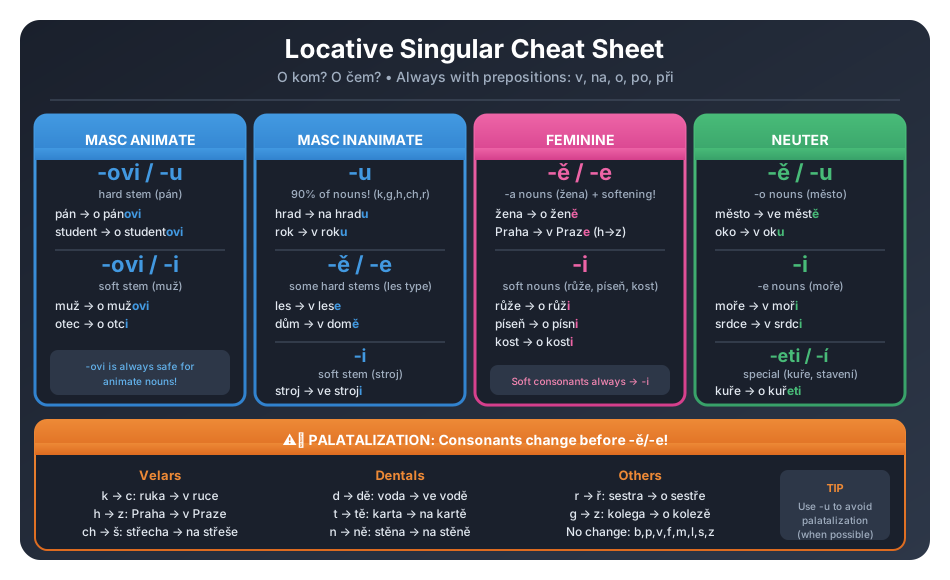
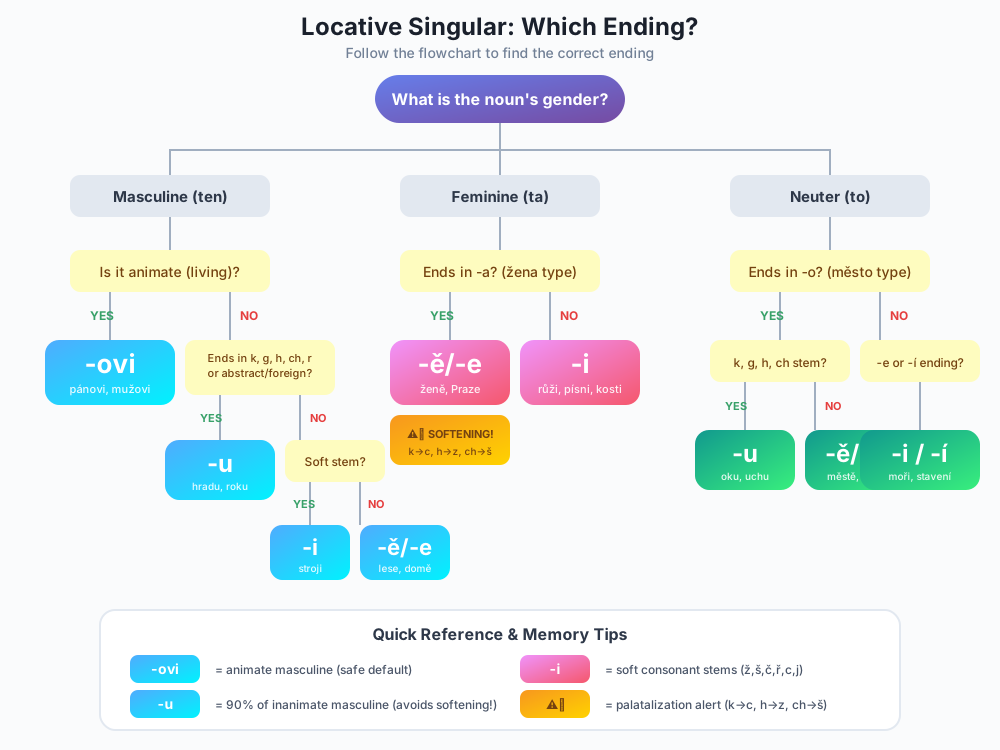
Which Ending? Follow the Flowchart
Memory Aids (Mnemonics)
Use these tricks to remember the patterns you just saw in the cheatsheets above.
The 90% Rule for Masculine Inanimate
When in doubt with masculine inanimate nouns in singular, use -u:
- It applies to ~90% of masculine inanimate nouns
- It avoids palatalization complications
- Works for: abstract nouns, foreign words, nouns ending in -k, -g, -h, -ch, -r
Think: "U are safe with U!"
Remembering Plural Endings: "The -CH Club"
All locative plural endings end in -ch. Think of it as the "CH Club" with three membership types:
| Ending | "Member Type" | Memory Aid |
|---|---|---|
| -ách | "Á" members | Ánna loves femiAine -a nouns |
| -ech | "E" members | Hard consonants get Easy -ech |
| -ích | "Í" members | Soft sounds are Íntense → -ích |
Remembering Soft Consonants: "Žena Šije Čepici"
The soft consonants that trigger -ích can be remembered with:
Žena Šije Čepici, Řekla Cizí Jeptišce, Ňáká Ďívka Ťuká
(A woman sews a cap, she told a foreign nun, some girl is knocking)
→ ž, š, č, ř, c, j, ň, ď, ť = soft consonants
Palatalization Changes: "The Shifting Sounds"
When consonants change before -ě/-e, remember this pattern:
| Before | After | Memory |
|---|---|---|
| k → c | ruka → ruce | Kick becomes Catch |
| h → z | Praha → Praze | Hello becomes Zebra |
| ch → š | střecha → střeše | CHop becomes SHop |
| r → ř | sestra → sestře | Roll becomes Řoll (Czech r) |
| g → z | kolega → kolezě | Go becomes Zoom |
V vs Na: The Critical Distinction
One of the biggest challenges for Czech learners is knowing when to use v (in) versus na (on/at). While the basic rule is simple — v for enclosed spaces, na for surfaces — many nouns have fixed preposition usage that must be learned.
The Basic Pattern
| Preposition | Basic Meaning | Typical Use |
|---|---|---|
| v/ve | in, inside | Enclosed spaces, containers, cities, countries |
| na | on, at | Surfaces, open areas, events, some institutions |
Historical Background
Originally:
- na was used for open, elevated, or exposed places (na hoře = on the mountain)
- v was used for enclosed or interior spaces (v domě = in the house)
Over time, certain nouns developed fixed preposition usage regardless of whether they're physically "open" or "enclosed."
Common Exceptions (Memorize These!)
Institutions using na (not v):
| Czech | English | Why na? |
|---|---|---|
| na poště | at the post office | Historical: mail collected outdoors |
| na policii | at the police station | — |
| na úřadě | at the office/authority | — |
| na fakultě | at the faculty | Academic tradition |
| na univerzitě | at the university | Academic tradition |
| na nádraží | at the station | Open platforms |
| na letišti | at the airport | — |
| na ambasádě | at the embassy | — |
Events and activities using na:
| Czech | English |
|---|---|
| na koncertě | at a concert |
| na schůzi | at a meeting |
| na přednášce | at a lecture |
| na výstavě | at an exhibition |
| na svatbě | at a wedding |
| na oslavě | at a celebration |
Geographic terms:
| Use v | Use na |
|---|---|
| v Praze (in Prague) | na Slovensku (in Slovakia) |
| v České republice (in Czech Rep.) | na Moravě (in Moravia) |
| v Německu (in Germany) | na Sibiři (in Siberia) |
| v Americe (in America) | na Floridě (in Florida) |
| v hotelu (in a hotel) | na chatě (at a cottage) |
v záchodě = inside the toilet bowl (literal) na záchodě = in the bathroom/restroom (correct)
Similarly: na toaletě (at the toilet/restroom) is the polite form.
Quick Rules of Thumb
- Countries: Usually v, except islands and some regions use na
- Islands: Almost always na (na Kubě, na Islandu, na Krétě)
- Surfaces and floors: na (na podlaze, na zemi, na střeše)
- Buildings as institutions: Often na (na škole, na úřadě)
- Buildings as physical structures: Often v (v budově školy)
- Events: Almost always na
- Abstract concepts: Usually v (v problému, v situaci)
Usage
1. Static Location (Kde?)
Used with prepositions v/ve (in) and na (on).
- Jsem v Praze. (I am in Prague.)
- Kniha je na stole. (The book is on the table.)
2. Topic (About)
Used with preposition o.
- Mluvíme o filmu. (We are talking about a film.)
- Kniha o historii. (A book about history.)
3. Other Prepositions
- Po (after/along): Po obědě. (After lunch.) / Jdu po ulici. (I am walking along the street.)
- Při (during/at): Při práci. (During work.)
Detailed Reference Tables
Singular Endings
| Gender | Model | Ending | Example (Nom → Loc) |
|---|---|---|---|
| Masc Animate | pán | -ovi / -u | pán → o pánovi |
| muž | -ovi / -i | muž → o mužovi | |
| Masc Inanimate | hrad | -u / -ě | hrad → o hradu, les → v lese |
| stroj | -i | stroj → o stroji | |
| Feminine | žena | -ě / -e | žena → o ženě, Praha → v Praze |
| růže | -i | růže → o růži | |
| píseň | -i | píseň → o písni | |
| kost | -i | kost → o kosti | |
| Neuter | město | -ě / -u | město → ve městě |
| moře | -i | moře → v moři | |
| kuře | -eti | kuře → o kuřeti |
Before -ě/-e, hard consonants change:
- Praha → v Praze (h → z)
- kniha → v knize (h → z)
- ruka → v ruce (k → c)
- střecha → na střeše (ch → š)
Plural Endings
The Locative Plural is characterized by endings containing -ch. The specific vowel before -ch depends on the noun's gender and declension class.
At a Glance (Plural)

Which Ending? Follow the Flowchart

The Universal Pattern
All Locative Plural endings end in -ch:
- -ech (hard consonant stems)
- -ách (feminine žena type)
- -ích (soft consonant stems)
Masculine Animate
| Model | Ending | Example (Nom Sg -> Loc Pl) |
|---|---|---|
| pán (hard) | -ech | pán -> o pánech |
| muž (soft) | -ích | muž -> o mužích |
| soudce | -ích | soudce -> o soudcích |
| předseda | -ech | předseda -> o předsedech |
Examples in context:
- Mluvili jsme o těch doktorech. (We talked about those doctors.)
- V těchto mužích vidím budoucnost. (I see the future in these men.)
- Film o amerických prezidentech. (A film about American presidents.)
- Kniha o českých spisovatelích. (A book about Czech writers.)
Masculine Inanimate
| Model | Ending | Example (Nom Sg -> Loc Pl) |
|---|---|---|
| hrad (hard) | -ech | hrad -> na hradech |
| stroj (soft) | -ích | stroj -> ve strojích |
Examples in context:
- Na těchto hradech se natáčely filmy. (Films were shot at these castles.)
- O českých lesích se píše v mnohých knihách. (Czech forests are written about in many books.)
- V moderních strojích je spousta elektroniky. (There's a lot of electronics in modern machines.)
- Po mostěch chodí tisíce lidí denně. (Thousands of people walk across the bridges daily.)
Feminine
| Model | Ending | Example (Nom Sg -> Loc Pl) |
|---|---|---|
| žena (hard) | -ách | žena -> o ženách |
| růže (soft) | -ích | růže -> o růžích |
| píseň (soft) | -ích | píseň -> o písních |
| kost | -ech | kost -> o kostech |
Examples in context:
- V těchto zemích se mluví slovanskými jazyky. (Slavic languages are spoken in these countries.)
- Na ulicích bylo plno lidí. (The streets were full of people.)
- Přemýšlel o svých chybách. (He was thinking about his mistakes.)
- V nemocnicích chybí personál. (There's a staff shortage in hospitals.)
- Diskutovali jsme o těch možnostech. (We discussed those possibilities.)
Neuter
| Model | Ending | Example (Nom Sg -> Loc Pl) |
|---|---|---|
| město (hard) | -ech | město -> ve městech |
| moře (soft) | -ích | moře -> v mořích |
| kuře (-ata pl.) | -atech | kuře -> o kuřatech |
| stavení | -ích | stavení -> ve staveních |
Examples in context:
- V českých městech je krásná architektura. (There's beautiful architecture in Czech cities.)
- O nebezpečích internetu se hodně mluví. (The dangers of the internet are much discussed.)
- Na letištích jsou přísné kontroly. (There are strict controls at airports.)
- V tropických mořích žijí korály. (Corals live in tropical seas.)
Consonant Alternations in Plural
Unlike the singular, the Locative Plural typically does not trigger palatalization. However, some stem changes occur:
Velar Consonants (k, g, ch, h)
Before -ách and -ech, velars generally remain unchanged:
- kniha -> v knihách (no change)
- noha -> na nohách (no change)
- hoch -> o hoších (ch -> š before -ích)
Fleeting Vowels
Some nouns lose a vowel in the plural stem:
- pes (dog) -> o psech (e disappears)
- den (day) -> ve dnech (e disappears)
- sen (dream) -> ve snech (e disappears)
- lev (lion) -> o lvech (e disappears)
The -ích vs -ech Distinction
Use -ích when:
- The stem ends in a soft consonant (ž, š, č, ř, c, j, ň, ď, ť)
- The noun follows a soft declension pattern
Use -ech when:
- The stem ends in a hard consonant (d, t, n, r, s, z, l, etc.)
- The noun follows a hard declension pattern
Borderline cases:
- hotel -> v hotelech / v hotelích (both acceptable, -ech more common)
- kostel -> v kostelech / v kostelích (both acceptable)
Irregular and Exceptional Forms
Nouns with Stem Changes
| Nominative Sg | Locative Pl | Note |
|---|---|---|
| člověk (person) | o lidech | suppletive stem |
| rok (year) | v letech / po rocích | letech = "years"; rocích = archaic |
| oko (eye) | v očích | stem change + soft ending |
| ucho (ear) | v uších | stem change + soft ending |
| ruka (hand) | na rukou / v rukách | rukou = archaic/poetic |
| noha (leg) | na nohou / na nohách | nohou = archaic/poetic |
| přítel (friend) | o přátelích | stem change |
| dítě (child) | o dětech | suppletive plural stem |
Dual Remnants (Archaic/Poetic)
Czech preserves remnants of the old dual number in body parts:
- na rukou (on [two] hands) — archaic for na rukách
- na nohou (on [two] feet) — archaic for na nohách
- v očích (in [the two] eyes) — standard form
- v uších (in [the two] ears) — standard form
Modern Czech prefers:
- na rukách, na nohách (regular plural)
- v očích, v uších (irregular, but standard)
Stylistic Variations
Colloquial vs. Literary Forms
Some nouns have variant endings:
| Context | Colloquial | Literary/Formal |
|---|---|---|
| In the forests | v lesích | v lesech |
| About the fingers | o prstech | o prstech (same) |
| In the parks | v parcích | v parcích (same) |
Regional Variations
Moravian dialects may use different endings:
- Standard: v domech (in the houses)
- Moravian: v domách (dialectal)
Advanced Usage Patterns
Prepositional Phrases with Plural Locative
V/Ve (in)
- v těchto podmínkách (in these conditions)
- ve všech případech (in all cases)
- v minulých staletích (in past centuries)
- ve válkách a konfliktech* (in wars and conflicts)
Na (on/at)
- na všech úrovních (at all levels)
- na různých místech (in various places)
- na sociálních sítích (on social networks)
- na mnoha příkladech (through many examples)
O (about)
- o politických otázkách (about political questions)
- o svých zkušenostech (about one's experiences)
- o těchto tématech (about these topics)
- o minulých událostech (about past events)
Po (after/along/throughout)
- po staletích útlaku (after centuries of oppression)
- po všech stránkách (in all respects)
- po celých Čechách (throughout Bohemia)
- po přestávkách (after breaks)
Při (during/at)
- při různých příležitostech (on various occasions)
- při volbách (during elections)
- při zkouškách (during exams)
- při těchto teplotách (at these temperatures)
Idiomatic Expressions
- být v koncích — to be at one's wits' end
- na vahách — hanging in the balance
- v kostce (sg) / ve dvou slovech — in a nutshell
- po zuby ozbrojený — armed to the teeth
- v oblacích — in the clouds (daydreaming)
- chodit po špičkách — to walk on tiptoes
- mít něco v genech — to have something in one's genes
- ve hvězdách — in the stars (uncertain)
Agreement with Adjectives and Pronouns
In the Locative Plural, adjectives and pronouns also take specific endings:
Adjective Endings (Locative Plural)
| Type | Ending | Example |
|---|---|---|
| Hard | -ých | v krásných městech |
| Soft | -ích | o cizích lidech |
| Possessive | -ích | v matkčiných dopisech |
Demonstrative Pronouns
| Pronoun | Locative Pl |
|---|---|
| ten/ta/to | těch |
| tento/tato/toto | těchto |
| tamten | tamtěch |
| onen | oněch |
Examples:
- O těch problémech víme. (We know about those problems.)
- V těchto dnech bude pršet. (It will rain these days.)
- Na jakých základech to stavíte? (On what foundations are you building this?)
Quantifiers
| Word | Locative Pl |
|---|---|
| všechen (all) | všech |
| některý (some) | některých |
| žádný (no/none) | žádných |
| každý (every) | — (no plural) |
| mnoho (many) | mnoha (indeclinable) |
| několik (several) | několika (indeclinable) |
Examples:
- Ve všech ohledech to bylo správné. (It was correct in all respects.)
- O některých věcech se nemluví. (Some things aren't talked about.)
- V mnoha případech / v mnoha směrech (in many cases / in many ways)
Common Errors and How to Avoid Them
1. Confusing -ech and -ích
❌ v strojech → ✅ ve strojích (soft stem) ❌ o mužech → ✅ o mužích (soft stem) ❌ v lesích → ✅ v lesech or v lesích (both acceptable)
2. Forgetting Stem Changes
❌ o člověcích → ✅ o lidech ❌ v rocích → ✅ v letech (for years of time) ❌ o dítěch → ✅ o dětech
3. Using Singular Instead of Plural
❌ Na stole jsou knihy. (Where are books? On the table.) — ✅ correct but singular stole ✅ Na stolech jsou knihy. (Books are on the tables.) — plural
4. Wrong Preposition
❌ do městech → ✅ v městech or do měst (Genitive for motion) Remember: Locative = static location; Genitive/Accusative = motion
5. Mixing Declension Patterns
❌ o soudcách → ✅ o soudcích (follows soft pattern) ❌ v mořech → ✅ v mořích (soft neuter)
Verbs That Require Locative
Many Czech verbs are followed by specific prepositions that require the locative case. Memorizing these verb + preposition combinations is essential.
Verbs with na + Locative
| Verb | Meaning | Example |
|---|---|---|
| záležet na | to depend on | Záleží na tobě. (It depends on you.) |
| lpět na | to cling to, insist on | Lpí na svých názorech. (He clings to his opinions.) |
| trvat na | to insist on | Trvám na tom. (I insist on it.) |
| podílet se na | to participate in | Podílel se na projektu. (He participated in the project.) |
| pracovat na | to work on | Pracuji na úkolu. (I'm working on the task.) |
| jezdit na | to ride (habitually) | Jezdí na kole. (He rides a bike.) |
Verbs with v + Locative
| Verb | Meaning | Example |
|---|---|---|
| žít v | to live in | Žiji v Praze. (I live in Prague.) |
| spočívat v | to consist of | Problém spočívá v tom, že... (The problem consists in...) |
| vidět v | to see in (someone) | Vidím v něm přítele. (I see a friend in him.) |
| věřit v | to believe in | Věřím v Boha. (I believe in God.) |
Verbs with o + Locative
| Verb | Meaning | Example |
|---|---|---|
| mluvit o | to talk about | Mluvíme o filmu. (We're talking about the film.) |
| přemýšlet o | to think about | Přemýšlím o budoucnosti. (I'm thinking about the future.) |
| diskutovat o | to discuss | Diskutovali o problému. (They discussed the problem.) |
| pochybovat o | to doubt | Pochybuji o tom. (I doubt it.) |
| rozhodovat o | to decide about | Rozhoduji o tom. (I'm deciding about it.) |
| vědět o | to know about | Vím o tom. (I know about it.) |
| snít o | to dream about | Sní o cestování. (She dreams about traveling.) |
| starat se o | to care about | Stará se o děti. (She takes care of the children.) |
Verbs with po + Locative
| Verb | Meaning | Example |
|---|---|---|
| toužit po | to long for | Touží po svobodě. (He longs for freedom.) |
| pátrat po | to search for | Policie pátrá po zloději. (Police are searching for the thief.) |
| volat po | to call for | Volají po změně. (They're calling for change.) |
Some verbs take different cases with the same preposition for different meanings:
- myslet na + ACC = to think of (directing thoughts toward): Myslím na tebe. (I'm thinking of you.)
- myslet o + LOC = to think about (opinion): Co si myslíš o tom filmu? (What do you think about that film?)