Personal Pronouns (Osobní zájmena)
Personal pronouns decline just like nouns. They are often the hardest part of Czech morphology because they have short (clitic) and long (emphatic) forms.
Visual Overview
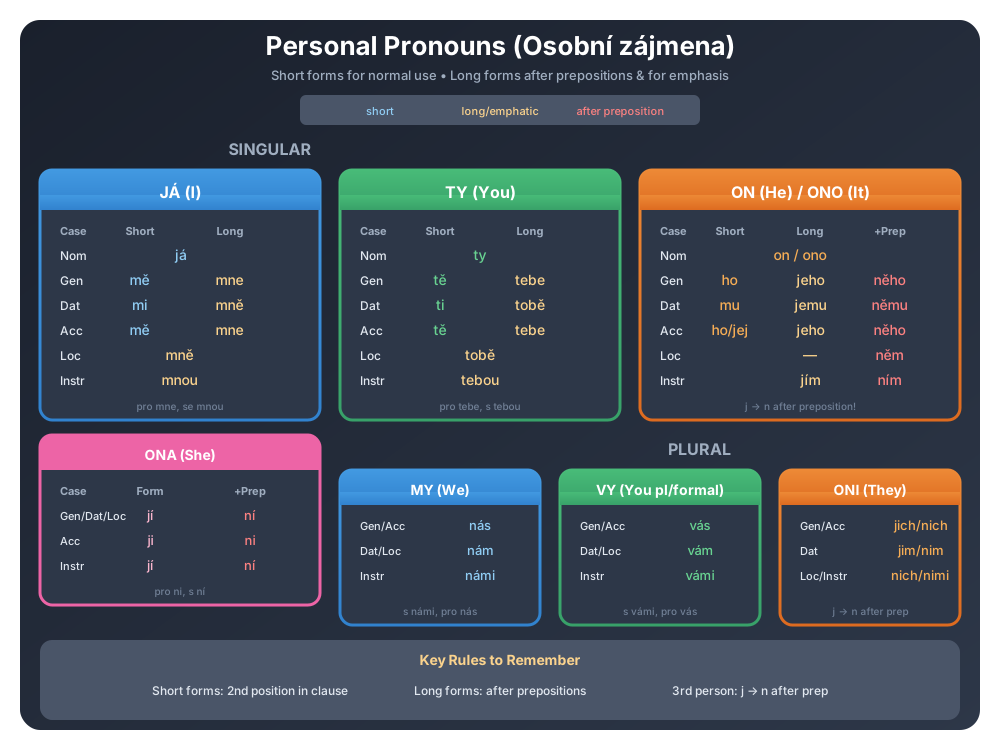
Basic Forms (Nominative)
| Person | Singular | Plural |
|---|---|---|
| 1st | Já (I) | My (We) |
| 2nd | Ty (You) | Vy (You - plural/formal) |
| 3rd | On (He), Ona (She), To (It) | Oni (They - Ma), Ony (They - F/Mi), Ona (They - N) |
Short vs. Long Forms
In Genitive, Dative, and Accusative, some pronouns have two forms.
- Short (Weak): Used in normal sentences, placed in the "second position" (Wackernagel's position). Cannot start a sentence.
- Long (Strong): Used after prepositions or for emphasis. Can start a sentence.
Example: "Me" (Accusative/Genitive)
- Short: mě
- Long: mne (archaic/formal) or mě (standard) - Wait, they are often the same now!
- Let's look at Ty (You):
- Short: tě (Vidím tě. - I see you.)
- Long: tebe (Vidím tebe, ne jeho. - I see YOU, not him. / Pro tebe. - For you.)
The "Him" Table (On)
| Case | Short | Long (Emphasis) | After Preposition |
|---|---|---|---|
| Gen | ho | jeho | něho |
| Dat | mu | jemu | němu |
| Acc | ho | jeho | něho |
Note: After a preposition, "j" becomes "n" (jeho -> něho).