Modal Verbs (Modální slovesa)
Modal verbs modify the meaning of the main verb, expressing necessity, possibility, ability, or desire. They are followed by an infinitive.
Visual Overview
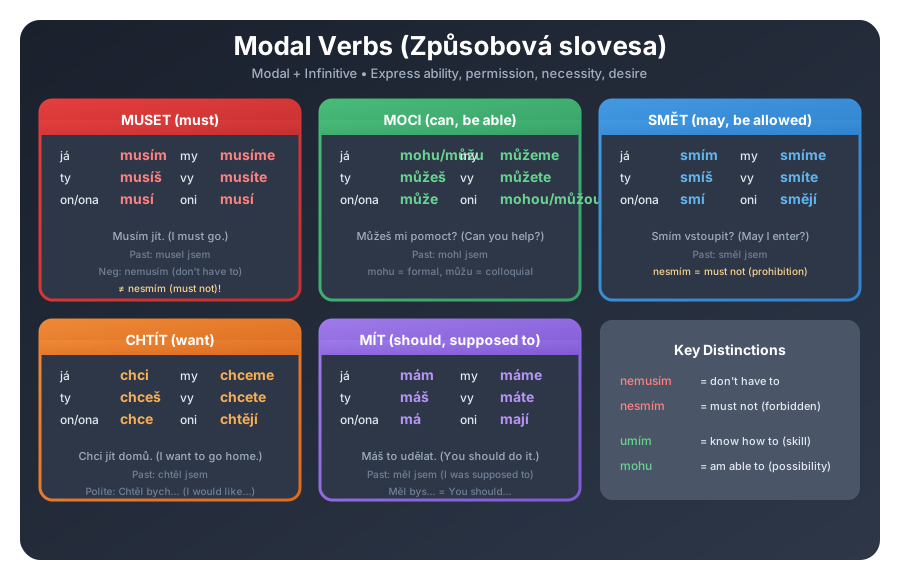
The Big 5
| Verb | Meaning | 1st Person (Já) | 3rd Person (On) |
|---|---|---|---|
| Muset | Must / Have to | musím | musí |
| Moci / Moct | Can / Be able to | můžu / mohu | může |
| Chtít | Want | chci | chce |
| Smět | May / Be allowed to | smím | smí |
| Umět | Know how to / Can | umím | umí |
Conjugation
Muset (Must)
- musím, musíš, musí, musíme, musíte, musí.
- Musím jít. (I must go.)
Chtít (Want)
- chci, chceš, chce, chceme, chcete, chtějí.
- Chci pivo. (I want a beer.)
Moci (Can)
- můžu/mohu, můžeš, může, můžeme, můžete, můžou/mohou.
- Můžeš mi pomoct? (Can you help me?)
Smět (May)
- smím, smíš, smí, smíme, smíte, smějí.
- Smím prosit? (May I ask [for a dance]?)
Umět (Know how)
- umím, umíš, umí, umíme, umíte, umí.
- Umím plavat. (I know how to swim.)
Negation and Meaning Changes
- Nemuset = Don't have to (Lack of obligation).
- Nemusíš to dělat. (You don't have to do it.)
- Nesmět = Must not (Prohibition).
- Nesmíš to dělat. (You must not do it.)